Vacation Rental Website Design Essentials for Hosts
Want more direct bookings? Learn the essential design elements every vacation rental website needs to attract guests, build trust, and convert visits into stays.
Key Takeaways:
- Dedicated vacation rental websites give hosts more control over branding, guest communication, and pricing.
- Effective vacation rental website designs have mobile-friendly layouts, high-quality photos, detailed descriptions, and strategically placed “Book Now” buttons.
- SEO, social media marketing, and email can effectively drive more traffic to increase direct bookings.
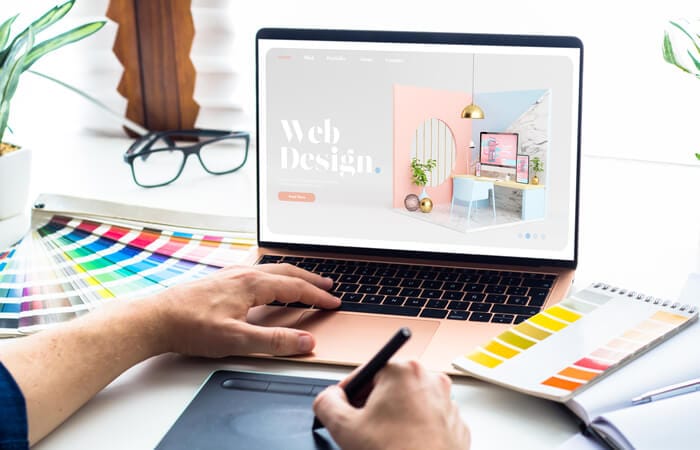
Simple, yet attractive, vacation rental website design is crucial for attracting travelers to your direct booking website and growing loyalty. Not only should the website’s aesthetic be first-class, but also its functionality.
This might require more time, but luckily there are vacation rental website builders, channel management solutions, and booking software available to simplify the process. Plus, with these tips and common mistakes to avoid, you’ll have your own website up and running quickly.
Do I Need My Own Vacation Rental Website?
While it is not mandatory that you create your own vacation rental website, it is recommended as it can add another revenue stream. In addition to creating more potential revenue, here are the other main benefits that having your own vacation rental website can offer you:
More control over your brand’s image
A vacation rental website can be used as an extra marketing tool to promote your brand identity and increase brand recognition. What makes it so attractive is that you won’t have to follow strict rules or guidelines as is the case when listing on online travel agencies.
For example, you can decide on your:
- Layout and theme
- Terms and cancellation policies
- Payment structure
- Security deposit
It is also easier to launch other types of advertising strategiesand marketing campaigns. You can, for instance, send a monthly newsletter using your brand’s logo and color scheme to previous guests.
Better guest communication and guest experience
When you design your own vacation rental website, you do not have to limit your listing titles and property descriptions to a certain layout or character limit. This means that you can write more detailed overviews.
What’s more, you can also include a blog section. Here, you can share more relevant information and news about your property and the neighborhood.
By going the extra mile to ensure that potential guests have access to all the important information about your vacation rentals, they will know better what to expect. This will ultimately improve the guest experience.
On top of that, you can also use email for communication. Some travelers prefer communicating directly with the host instead of having to use a third-party app and will welcome this communication method.
Lower prices for guests
If in the past you had to increase your nightly rate in order to recuperate Airbnb’s fees, you can now possibly reduce your rate again as you won’t have to pay OTA booking fees. This can help to boost your occupancy rate. So, it is a win-win for both guests and hosts. Hosts get more bookings and guests pay an affordable price.
How Should I Design a Vacation Rental Website?
1. Decide if you want to use a website builder or a website designer
Hosts have a choice for how their website will be designed and will have to choose what works best for them. The three main options are: a vacation rental website builder, a generic website builder, or a private website developer.
Vacation rental website builder
There are a number of vacation rental software solutions that include a website builder in its package. A good vacation rental website builder can complete most of the steps mentioned in this section for hosts automatically.
This means that hosts do not need any prior coding experience or other technical know-how. While it does not offer as many customization options, all the most important design elements will already be tailored to a vacation rental business and hosts will have professional templates and themes to work with.
What is the best vacation rental website builder?
If this sounds like the best approach for your needs, you can try out a tool like iGMS which offers one of the best website builders.
What makes this such a great tool is that you will have your very own website in a matter of minutes. After you have clicked on the “Create a website” button, it will convert your current Airbnb listing into a website by adding all the photos, descriptions, and rates.
Generic website builder
If you do not want to use vacation rental software, you can use a generic website builder. However, this can be more time-consuming and you will need to be more familiar with website design.
A generic website builder will also have stunning templates and themes that you will need to customize on your own. Though, it might be more difficult to find a theme that has been designed specifically for vacation rental businesses.
You will also need to put in some extra research to find a good booking engine plugin or widget so that your website will have a proper reservation system for accepting online bookings.
Professional website designer and developer
When opting for this approach, you will work with a professional website designer on the website design, layout, themes, and colors.
While it is more expensive than a website builder, you won’t have to spend much time designing your website yourself. Though, you might have to manage the website designer a bit and, depending on your contract, ongoing support might not be included.
This can be tricky later on when you need to update your listings. However, partnering with a reputable design/development agency, ensures that you have access to skilled professionals who can create a visually appealing and functional website tailored to your specific needs.
2. Choose a domain name
Your domain name refers to your website address (like www.igms.com). The best domain names are unique and easy to spell and recall. While it does not have to be the name of your listing, your own domain name should have a logical connection to your brand.
3. Plan your pages and content
As mentioned earlier, your website should be functional. It should be easy for visitors to find their way around your site. For this reason, your website layout is critical. You will need to ensure that all the essential pages are user-friendly (and mobile-friendly) and that the content answers all their potential questions.
Pages to include in your vacation rental website
The following are some of the pages a vacation rental website could have, but hosts can add other pages in addition to these as they see fit:
About us
Considering that most travelers choose a short-term rental property for a more personal and authentic experience, your About Us page has a very important job.
What is the story behind your business? How did you get started?
Guests appreciate a more personal connection with their hosts.
Use this page to introduce yourself and your business. Just like guests want to see high-quality photos of your property, including a photo of yourself can also help to set your property apart. After all, they won’t be using a reputable online travel agency and a photo of yourself will help to establish trust.
Properties/rooms
Each rental property that you manage should have its own dedicated page. Here, you will describe each property and its amenities in enough detail and make sure that you include all the necessary information like:
- Location
- Type of property
- Number of bedrooms (and beds)
- Number of bathrooms
- Rate
To make it easier for guests to book a specific property, you can also include a booking form or “Book Now” button on each property page when you have multiple properties.
Availability
Website visitors will also need an availability calendar. This will be linked to the booking engine or vacation rental software you use.
It is important to keep the calendar updated and synced with a channel manager to avoid double-bookings. Using booking software is the best way to do that.
In addition to offering a website builder, iGMS also includes a channel manager feature with a unified inbox and a multi-calendar. This means that you can still continue listing on third-party vacation rental platforms such as Airbnb, Booking.com, and Vrbo without double-bookings becoming an issue.
What’s more, you can keep track of all your reservations, automate guest messaging and reviews, and manage daily tasks with your team—all in one convenient platform.
Reviews
Similar to a photo of yourself, guest reviews also help to establish trust. In fact, potential guests will pay a lot of attention to reviews and these can make all the difference. You can, for example, use a website plugin that will automatically gather your reviews from other websites and include them on your own booking website.
To make the most of reviews, it is important that you update your website design often so that you can include the latest reviews. After all, if your most recent review is six months old, your target audience will start wondering if you are still open for business.
Things to do and local recommendations
Even if you have a five-star rental, your guests will most likely want to explore the area too. So, it is a good idea to share some suggestions for what they can do in the area. Your guests will be appreciative of these extra little details and it will help to show them that you are indeed a professional host.
Special offers
One of the benefits of booking directly with the host is that you can possibly score an attractive special offer. So, it can be a good idea to include a special offers page where you can promote coupon codes or discounts for longer stays, for example.
Plus, considering that you won’t have the additional cost of the booking fees that other listing sites will charge, you can probably afford to share special offers from time to time.
Contact us
In addition to an inquiry form, you will also need to list your contact details like an email address and phone number. Most website builders also make it possible for hosts to offer a direct contact form that guests can complete and submit.
It can also be a good idea to include social media links so that you can build your online presence.
4. Design the perfect logo
A unique logo is a key element of your brand identity and it will help your short-term rental business to stand out.
When creating a vacation rental logo, you can either hire a design agency, enlist the services of a freelance graphic designer, or, if you have some time to spare, use a free (or paid) tool. If you’re keen to design it yourself, these tools can help:
5. Take high-quality photographs of your property
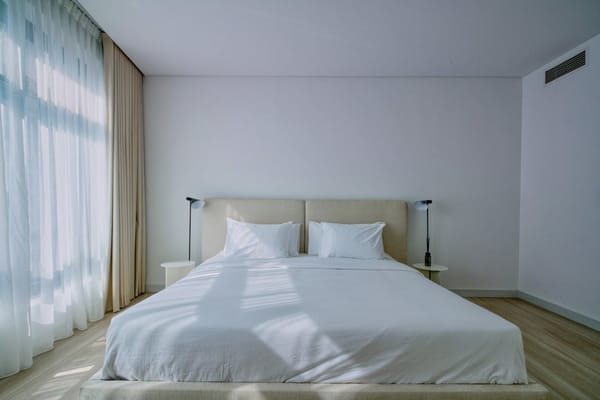
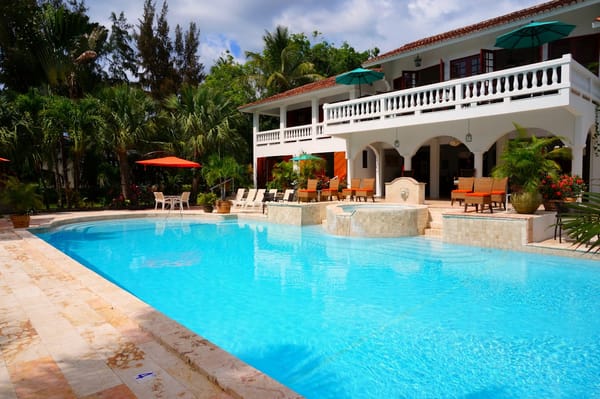
A vacation rental logo is a nice-to-have, visual element, but photo galleries are indispensable. Not only do photos attract the attention of potential guests, but they can be the deciding factor in the end.
Here are some helpful hints for taking photos that will generate more online bookings:
- Make sure your property is spotless
- Turn on all the lights before shooting (even in the daytime)
- Shoot into a corner
- Take photos from different angles
6. Load all your content
Now that you have decided on a website layout and a custom name, you are finally ready to load all your content. When loading your content, you can also do a check to make sure that all the details have been included and that the photos that you have selected do your property justice.
7. Ensure you have a user-friendly booking engine
When you use a vacation rental website builder, it will already have a built-in, user-friendly booking engine. This is how you will be able to accept online bookings directly from your website.
Alternatively, if you are using a hosting service like WordPress for your website, you will need to invest in a widget or plugin. The best way would be to invest in custom WordPress development to have your website professionally done.
Another must for WordPress site owners is having solid underpinnings to ensure it performs smoothly. Finding packages from reputable providers of WordPress hosting for everyone is a great way to guarantee this.
All in all, it should be as straightforward as possible for guests to book your property. So, to help get more direct bookings, remember to include a “Book Now” button that stays fixed to the top of your website menu bar. It is best to place it in the top right corner of your website where it will be very visible.
8. Edit, publish and start receiving bookings
Even if you checked the content for errors when you loaded the content, it is recommended that you do a final check. After you have published your website, everything will be live and a typo can be embarrassing.
How Can Guests Find My Vacation Rental Business Website?
In the beginning, a new vacation rental website will be difficult to find because guests won’t know about it yet. Luckily, there are a few things that you can do to help search engines rank your website higher, making it easier for your target audience to find.
Vacation rental website design best practices
1. Make your website mobile-friendly
Nowadays, more website traffic is created via mobile devices than desktops. So, it is critical that you optimize your vacation rental website design for mobile devices as well. Plus, it can also help with search engine optimization (SEO).
You can make your website mobile-friendly by:
- Making your font easy and big enough to read
- Eliminating pop-ups
- Spacing out any hyperlinks and buttons
- Choosing a theme that accommodates mobile settings
Making your images as small as possible
2. Market on social media
Social media platforms attract a lot of traffic. So, it can be a good idea to market your custom website here too. Facebook and Instagram are probably the best social media platforms for marketing vacation rentals considering that they place a lot of emphasis on visuals. In addition to creating photo galleries, you can also use these platforms to share coupon codes and guest reviews as part of your marketing strategy.
At the end of the day, by taking advantage of social media integration through the expertise of a social media marketing agency you show to your target audience that you are actively involved and boast technical knowledge that can help to improve their guest experience.
3. Use email marketing
Many guests still prefer email as a communication method. So, be sure to include this in your strategy. You can, for example, send an email after your guests have checked out to help you get more guest reviews.
When using email marketing, remember that you can also ask guests who booked via online travel agencies if they want to opt in.
5. Start a blog
If you have some time to spare, starting a blog can be a great idea for drawing in website traffic. Not only will guests find the articles helpful and interesting, but a blog can also help custom websites to rank higher in the results of search engines.
6. Register on Google My Business
Google My Business helps businesses in various industries, including the vacation rental industry, to create a free business listing. The benefit of creating a free Google My Business profile is that your business will also show up on Google Maps, making it easier for guests to find your property.
Vacation rental website design mistakes to avoid
To ensure that the final result is a beautiful website that will help you to accept online bookings, here are some of the most common mistakes to avoid:
1. Lacking creative descriptions of your property and amenities
A property description should not only capture the attention of your audience but should also answer most questions. It is one of the few opportunities that you get to distinguish your vacation rental from similar listings. So, be sure to use it to your advantage.
2. Failing to provide any information about the surrounding area
Effective vacation rental website design should also take into account search engines. Providing information about the surrounding area is one of the most effective ways to boost local SEO.
3. Posting poor quality photos
As potential guests cannot visit your property beforehand, they need to rely on photos. If you post poor-quality photos, they might not be able to see all the high-quality furnishings and amenities on offer.
Also, it could communicate that you are not as attentive. This could negatively impact their experience and discourage them from booking altogether.
4. Having a disorganized website layout or color scheme
It should be easy for website visitors to find their way around your direct booking website. However, if the layout is cluttered or unintuitive, they will feel overwhelmed and will most likely rather leave your website.
5. Missing or not having enough call-to-action (“Book Now”) buttons
Not only should it be easy for visitors to navigate vacation rental websites, but it should also be as clear as day where they need to click if they want to book your property.
In short, whenever a visitor lands on your vacation rental website, they need to know what they should do next and enough “Book Now” buttons will tell them exactly what the next step is.
6. Failing to provide secure online payment options
In addition to an SSL certificate, you will also need to set up a payment solution that will allow you to accept and process credit card payments.
In today’s day and age, most guests feel the most at ease paying by credit card. While some financial services might offer you a cheaper price, the result is often unsecured online transfers. So, it is best to stick to vacation rental payment services that are well-known.
FAQs
Can a vacation rental website integrate with listing sites like Airbnb or Vrbo?
Yes! To ensure reliable calendar sync, the best is to use a channel manager, vacation rental software, or property management system (PMS). This way, you can rest assured knowing that details like availability and pricing are correct across all your channels.
What’s the best way to showcase property photos and videos online?
Start each property page with a full-width video or image that captures the mood. Then, organize photos by context like bedroom, kitchen, etc. Also remember to include captions or subtle overlays to highlight features and offer extra context.
What features should vacation rental web design include?
Key features to include in your web design are:
- Detailed descriptions of your vacation rentals
- Real-time availability and pricing
- Built-in booking functionality (along with secure payments)
- Trust-building elements like reviews
- Contact details